

What Industries Benefit Most From AI Agents?
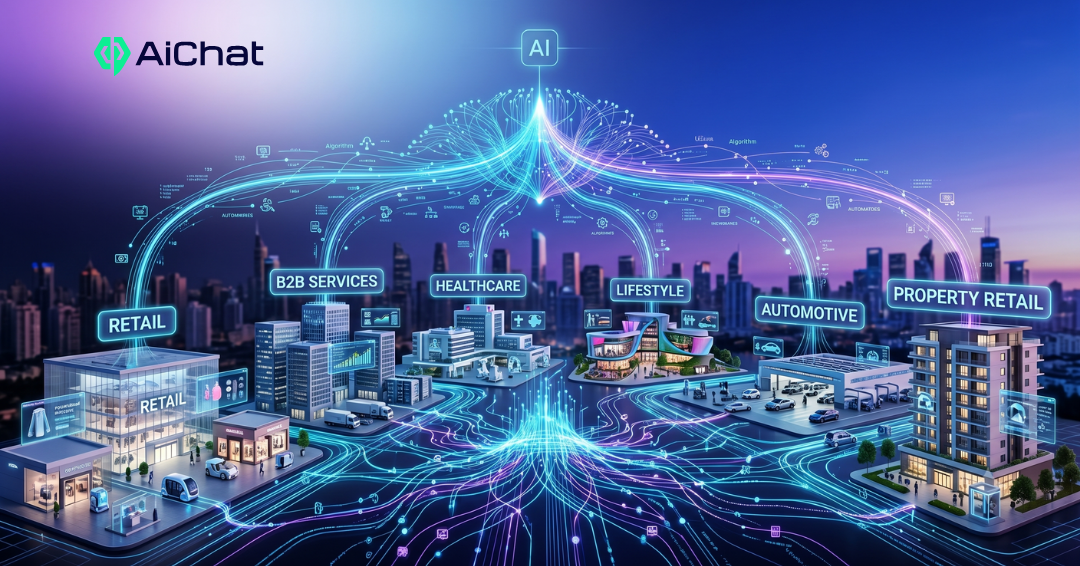
Enterprise technology adoption in 2026 has officially moved past the experimental phase. According to global adoption metrics from Capgemini, 82% of mid-market and enterprise organizations have formalized operational frameworks to integrate autonomous AI agents into their standard business processing stacks.
However, many business owners still ask: "Is my specific industry actually ready for this technology, or is this just software hype?"
The answer isn't determined by your industry code; it is determined by your workflow characteristics. If your team spends more than two hours a day manually replying to identical inquiries, copying data into a CRM, or chasing leads for appointments, your business is prime for automation.
Here is a factual analysis of the sectors realizing the highest return on investment (ROI) from conversational AI agents and how to audit your own business suitability.
The Top 4 Industries Dominating AI Agent Adoption
1. Consumer Retail & E-Commerce (The 24/7 Conversion Engine)
Retail operations experience highly volatile traffic spikes during promotions, product drops, and holiday cycles. Standard human support models cannot scale dynamically during these periods without crippling your margins.
- The Agent Workflow: Modern conversational agents natively process end-to-end purchasing journeys. They tap into backend storefronts to handle real-time product recommendations, check localized inventory counts, recover abandoned shopping sessions over WhatsApp, and independently resolve post-purchase tracking inquiries.
- The Value: Deflects up to 60% of routine inbound traffic while actively driving transactional sales entirely within the consumer's preferred messaging thread.
2. Professional & B2B Services (The Automated Lead Qualifier)
For consultancies, agencies, legal groups, and financial service firms, speed-to-lead dictates who wins the market. If a high-intent prospect fills out a contact form on your website and waits hours for a human callback, they will simply click on your closest competitor.
- The Agent Workflow: An agent acts as an immediate front-line client intake coordinator. It interacts with incoming website visitors, asks predefined discovery questions to judge budget and fit, logs the data directly into your CRM, and instantly serves a live booking link to lock in an appointment.
- The Value: Eliminates the manual email ping-pong of scheduling while ensuring your human sales team only spends time speaking with highly qualified, premium prospects.
3. Healthcare Clinics & Wellness (The Frictionless Administrator)
Medical clinics, dental offices, wellness centers, and specialized care facilities suffer from massive administrative overhead. Front-desk teams regularly get buried under repetitive phone calls for scheduling, basic pricing checks, and document collection.
- The Agent Workflow: Operating outside clinical medical data lines, administrative agents securely automate routine patient inquiries. They coordinate booking slots, send interactive appointment reminders across WhatsApp, guide new patients through pre-arrival documentation lists, and answer routine office facility queries.
- The Value: Drastically reduces human entry errors, minimizes missed appointment rates, and allows your clinic staff to focus entirely on on-site patient care.
4. Lifestyle, Automotive & Property Retail (The High-Value Nurturer)
Real estate agencies, automotive dealerships, and high-ticket experience providers operate on long, information-heavy sales cycles. Buyers require extensive education before making a massive financial commitment.
- The Agent Workflow: AI agents function as highly responsive document navigators. They parse massive floor plans, vehicle option lists, or amenity data sheets to serve precise, immediate answers to consumer questions. Furthermore, they nurture cold contacts via tailored WhatsApp follow-up campaigns based on the exact property or vehicle configuration the user previously browsed.
- The Value: Keeps prospects engaged outside of standard business hours, answering highly complex technical specifications instantly without requiring human sales intervention.
The Suitability Audit: Is Your Business Ready?
To cut through the noise, review this operational evaluation. If your business ticks two or more of the boxes below, an AI agent framework will deliver immediate, measurable cost-reductions to your bottom line:
- [ ] The Repeat Inbound Test: More than 40% of your incoming customer messages consist of identical questions (e.g., pricing lists, operating hours, delivery timelines, or appointment availabilities).
- [ ] The Omnichannel Fragmentation Problem: Your team is struggling to manage incoming conversations scattered across WhatsApp, Web Chat, and Social Media messengers simultaneously, resulting in missed leads.
- [ ] The Speed-to-Lead Delay: High-intent client inquiries arriving after 6:00 PM or during weekends sit unanswered until the following business day, leading to high drop-off rates.
- [ ] The Dialect and Language Barrier: Your staff operates in a regional environment where consumers frequently communicate using localized shorthand, mixed phrases, or regional dialects (Bahasa, Singlish, or Manglish).
Why Building From Scratch Fails Across Every Industry
Once business owners realize they need an AI agent, they often make the mistake of hiring an outside developer to code a system entirely from scratch.
As we unpacked in our 2026 AI Agent Pricing Guide, a ground-up build is an incredibly high-risk capital expense. It forces you to pay tens of thousands of dollars in developer hours simply to engineer basic messaging connections, secure database integrations, and complex human-handoff dashboards—components that already exist in the market.
The Platform Advantage: Instantly Live, Universally Adaptable
This is why modern businesses rely on established conversational engines like AiChat.
Instead of paying an engineering group to invent a custom machine from scratch, AiChat provides you with a battle-tested core engine on day one. You don't spend your budget on boilerplate software coding; you spend your time simply connecting your existing business guidelines, document pools, or product inventories into our ready-made framework.
- Native Multichannel Brain: A single assistant that deploys instantly across website chat and the WhatsApp Business API, pre-trained to comprehend regional linguistic variations like Singlish, Manglish, and Bahasa out of the box.
- No Technical Team Required: We manage the complex cloud hosting infrastructure, API token tracking, and security parameters. Your team manages your business; we handle the software evolution.
- Turnkey Human Escalation: If a conversion reaches a point that demands real human empathy or specialized closing, the agent hands the chat seamlessly to your existing staff with a complete, typed context summary.
Your industry isn't defined by the limits of legacy software. Stop letting operational lag dictate your business growth.
Frequently Asked Questions

.svg)
Answer
Yes. AI agents are highly effective for service-based businesses, B2B agencies, and local clinics. Instead of handling a shopping cart, the agent focuses on client intake, qualifying lead indicators, answering service parameters, and pushing users directly to your booking calendar.

Answer
An enterprise-grade platform does not allow the agent to guess or break context. If an inquiry crosses outside its data boundaries or triggers an urgency signal, the system smoothly hands the thread over to a live human on your team, passing along the full history so the customer experiences zero communication friction.
Answer
While custom coding an engineering pipeline from scratch takes months, deploying via an established platform like AiChat allows you to upload text files, sync calendars, or link standard website links instantly. A fully functional, custom-branded agent can be ready for live deployment in 2 to 6 weeks.


